
Strong public service requires people who can navigate complexity, break through barriers, and move important work forward. This seven-session Practical Systems Skills series will equip current, former, and future federal employees with tools to solve problems, make better decisions, work across boundaries, lead effective meetings, use AI responsibly, and sustain themselves and their teams under pressure. Civil Service Strong, the Environmental Protection Network, and the Partnership for Public Service are co-hosting the series from September through December 2026. Participants may attend individual webinars or complete the full series to develop a connected set of practical leadership and management skills.


Explore and RSVP for each webinar below:
Strong decisions are grounded in sound evidence, aligned with an agency’s mission, and made with a clear understanding of who has the authority to act. Join Rob Shriver, former Acting Director of the U.S. Office of Personnel Management, for an interactive webinar on how to bring these elements together to move decisions forward.
Participants will learn practical frameworks for making better decisions, structured questions to anchor decisions in mission and strategy, and approaches for making sound decisions even when organizations are under stress. The session will also focus on what it takes to move beyond the decision itself and get it implemented.

Rob Shriver, managing director of Civil Service Strong and Good Government Initiatives at Democracy Forward
Rob Shriver is Managing Director of Civil Service Strong and Good Government Initiatives at Democracy Forward, where he leads the Future of Government Initiative. He previously served in the Obama and Biden Administrations at the U.S. Office of Personnel Management, including as OPM’s Acting Director.
Federal agencies were built to solve problems in silos—one office, one pollutant, one mandate at a time. But today’s toughest challenges, from climate change and clean water to land use and energy policy, don’t respect those boundaries. Systems Thinking for Real Federal Problems, the first of seven sessions, draws on decades of environmental protection experience at the Environmental Protection Agency to introduce a practical, four-step framework for tackling this kind of complexity. Though grounded in environmental work, the approach is built for any federal practitioner navigating incomplete data, competing stakeholders and decisions that span more than one agency’s lane. This session offers a repeatable process for cutting through complexity, building better cross-functional partnerships and communicating solutions that actually hold up.
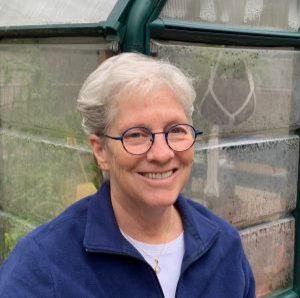
Jennifer Orme-Zavaleta, former principal deputy assistant administrator, EPA’s office of research and development and science advisor, EPA
Dr. Jennifer Orme-Zavaleta served at EPA from 1981-2021. From 2017-2021, she served as the Principal Deputy Assistant Administrator in the Office of Research and Development and EPA’s Science Advisor. Over the course of her career, Jennifer worked in the Office of Toxic Substances and Office of Water in the areas of human health and ecological research, risk assessment, policy and regulation development, strategic planning, and program implementation. As EPA’s Science Advisor, Jennifer Chaired the Agency’s Science and Technology Policy Council and worked to refocus the Risk Assessment Forum. In 2008, she served as the President of the Society of Toxicology’s Risk Assessment Specialty Section. In 2021, Jennifer received EPA’s Distinguished Career Service Award as well as a Distinguished Executive Presidential Rank Award.
Join our expert facilitator to discuss the best tips and tricks for designing and facilitating meetings that flow smoothly, build team cohesion and lead to actionable, tangible outcomes.
This session will tackle how to adjust for remote, hybrid and in-person meeting environments across various agency cultures, and will feature opportunities for engagement with the panel, leaving you ready to nail your next meeting.

Virginia Hill, senior executive coach and facilitator, Partnership for Public Service
Virginia (Ginny) Hill serves as a Senior Executive Coach & Facilitator for various leadership programs and initiatives across the Partnership. She is a Professional Certified Coach (PCC) by the International Coaching Federation (ICF) with over 800 hours of paid coaching. Ginny’s passion is working with leaders to reach their full potential through developing self-command, growth mindset, and an enhanced ability to work with others.
Ginny’s career began in the federal government as a Presidential Management Fellow (PMF) at the National Institutes of Health (NIH) in 2007. Joining the Partnership in February of 2015 started a new chapter in Ginny’s leadership development career. She has worked with a variety of agencies across federal government to design, deliver and evaluate leadership programming for leaders at all levels. Her areas of expertise include resilience, mindfulness, conflict management, time management, managing change, and driving innovation.
Federal employees work alongside colleagues whose experiences, perspectives, values, and approaches to public service may differ significantly from their own. Those differences whether across political perspectives, career and political roles, generations, or working styles can create tension, but they can also strengthen decision-making and collaboration when navigated effectively.
This interactive webinar will explore how current and former federal employees can find common ground. Participants will be introduced to practical frameworks for understanding and navigating differences, followed by a candid conversation with former federal leaders about working across political, professional, and generational divides. Participants will leave with practical strategies for communicating across differences, building trust, and maintaining productive working relationships while staying focused on shared goals and public service.

Kevin Johnson, director of workforce effectiveness, Partnership for Public Service
With more than 20 years of cross-sector experience, Kevin is a trusted leader in organizational development, change management, strategic human resources management, and workplace culture transformation. Known for his systems-thinking approach, he has led high-impact initiatives that strengthen collaboration, communication, and coordination across organizations.
Kevin is currently the Director of Workforce Effectiveness at the Partnership for Public Service. In this role, he partners with C-suite executives to align workforce strategies and practices with mission delivery priorities in complex, regulated environments.
Kevin began his career as a structural engineer before serving as a Peace Corps Volunteer in Ghana. He later led DEI and EEO strategy at the globally recognized research and development institution Battelle Memorial Institute. Kevin holds a Master of Human Resource Management and a Bachelor of Science in Civil Engineering from The Ohio State University.

John Rapp, founder and principal, Cairn Strategic Consulting
John Rapp is the founder and principal of Cairn Strategic Consulting, where he advises organizations on federal policy, budgeting, and organizational strategy. He is also a fellow with the Civil Service Strong initiative at Democracy Forward.
John spent more than two decades in federal service, including as Budget Director and Chief Risk and Performance Officer at the U.S. Department of Agriculture and Budget Director for the U.S. Forest Service. His work spanned agriculture, rural development, natural resources, and food programs, requiring close collaboration with agency leaders, career staff, and Congress.
Throughout his career, John has worked to make complex issues understandable and bring people with different responsibilities and perspectives together to solve problems. He brings a practical perspective on communicating difficult decisions, making room for different viewpoints, and building the trust people need to work effectively across organizational boundaries.
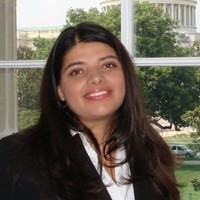
Gloria Montaño Greene, consultant, Montaño Greene Group LLC and former deputy under secretary for farm production and conservation, USDA
Gloria Montaño Greene served as the Deputy Under Secretary for Farm Production and Conservation at USDA in the Biden Administration.
At USDA, Gloria managed and oversaw four federal agencies: Farm Service Agency, Risk Management Agency, Natural Resources and Conservation Services, and the Business Center. The mission area had more than 20,000 employees, 2,200 offices and $29 billion in mandatory and discretionary annual budget
Gloria led implementation of the programs from the American Rescue Plan, Inflation Reduction Act and the Bipartisan Infrastructure law. This is in addition to adhoc disaster programs, the Partnerships for Climate Smart Commodities, Water Saving Commodities and program redesign. She also served as the co-lead for the White House Drought Resilience Interagency Working Group and the National Drought Resilience Plan.
She also led the mission areas efforts for equity, customer experience, and streamlining of federal programs to push forward how the government can better serve underserved communities. This included adjusting existing policy to better reflect the needs of communities in programs and their respective education and outreach. Gloria led various operation and administrative efforts, which included increased retention and recruitment for the four agencies.
Gloria has served in leadership and community roles in the Executive and Legislative branch of the federal government, in Tucson, Phoenix, and Washington DC. Her experience is focused on government and community work, her expertise includes federal policy, politics, advocacy, intergovernmental relations, communications, and management. Currently a consultant focused on Arizona policy and community work.
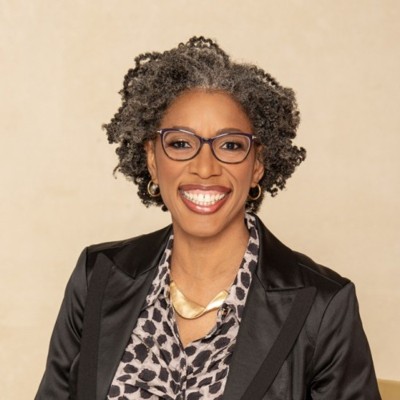
Monique Fortenberry, founder and principal, Monique Fortenberry LLC and former deputy executive director, FTC
Monique Fortenberry is the founder and principal of Monique Fortenberry, LLC, where she advises mission-driven organizations on human-centered change, employee engagement, and workplace strategy. She also serves as a strategic adviser and coach to senior executives and leaders navigating transition, helping them make clear decisions during periods of uncertainty.
Monique served in the federal government for more than 25 years, including 15 in the Senior Executive Service. She held senior roles across legal, operational, and human capital functions, including Deputy Executive Director, Deputy General Counsel, Associate General Counsel for General Law, Chief Counsel for Disaster Assistance, and Acting Chief Human Capital Officer.
Throughout her federal career, she worked with and reported directly to political appointees across multiple administrations. As both a lawyer and an operations executive, she supported several presidential transitions, ultimately serving as her agency’s transition coordinator. This work required her to build trust with a wide range of leaders, helping them advance their priorities and the agency’s mission.
Think that because you are not in the corner office, you have no power? Stan Meiburg, former Environmental Protection Agency deputy administrator, will encourage you to think again. Drawing on both his own experiences and the book “Influence Without Authority” by Allan Cohen and David Bradford, Stan will discuss ways that you can take advantage of resources you already have to operate more effectively in your current role and better prepare yourself for future leadership opportunities.

A. Stanley (Stan) Meiburg, former acting deputy administrator, EPA
Dr. A. Stanley (Stan) Meiburg spent 39 years with EPA, from 1977 to 2017. As Acting Deputy Administrator (2014-2017) he created the Water Infrastructure Resiliency and Finance Center, was a co-chair of the E-Enterprise Leadership Council, and served as an active member of the President’s Management Council. From 1996-2014, Stan served as Deputy Regional Administrator in EPA’s Region 4, after also serving as Deputy Regional Administrator in Region 6 in 1995, making him only the second person in EPA history to serve in this position in more than one region. Between 1985 and 1990, he was Director of the Planning and Management Staff of EPA’s Office of Air Quality Planning and Standards, where he led work on the 1990 Clean Air Act Amendments. In addition, he was the Executive Director of EPA’s Environmental Financial Advisory Board from 2001 to 2010 and served on many task forces promoting innovation and collaboration within the Agency. Since retiring from the EPA, Dr. Meiburg served for eight years at Wake Forest University as Director of Graduate Studies in Sustainability and Executive Director of the Sabin Center for Environment and Sustainability. He also served a four year term on the North Carolina Environmental Commission, chairing the Commission from 2019-2021. Among other honors, Stan received EPA’s Distinguished Career Award in 2014 and was recognized as a Distinguished Federal Executive in 2012.
Join us for a webinar that addresses burnout prevention, a universal pain point across all stages of public service, by focusing on Nassim Nicholas Taleb’s work on antifragility.
You will leave with practical skills to help you manage your own emotions and needs, determine how to best balance competing priorities and how to develop antifragile practices for yourself and your team. The session will also include a Q&A with the facilitators, who can help answer your questions on burnout.

John Zachary, senior manager and facilitator, Partnership for Public Service
John Zachary is a Senior Manager and Facilitator with the Partnership’s Public Service Leadership Institute, where he designs and delivers leadership programming on a variety of topics and supports the Partnership’s efforts to reform federal policy relating to career civil servants. Prior to joining the Partnership, John worked in K-12 education leading organizational development, continuous improvement, and change management efforts in schools across the country. John is a proud alum of William & Mary and Stanford’s Graduate School of Education, an avid golfer, and a loyal fan of his beloved Washington Wizards.
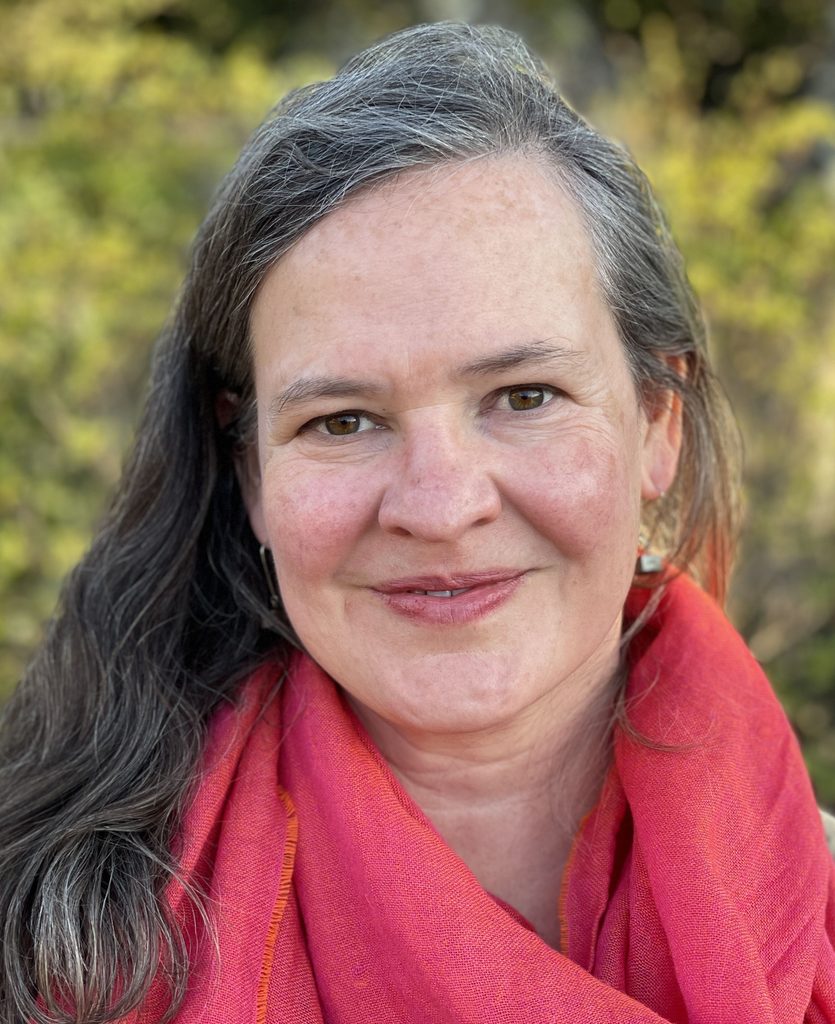
Jennifer Nikolaeff, former Diplomat with the U.S. Agency for International Development (USAID)
Jennifer served as a Diplomat with the U.S. Agency for International Development (USAID) for 15 years during which she strengthened U.S. relations across the Middle East, Africa, and Eastern Europe through impactful strategic policy and program implementation.
During her service, she led programs to counter extremism and gender-based violence, dismantle human trafficking networks, and expand youth economic opportunity. Her civilian- military efforts in North Africa and Afghanistan strengthened security through bilateral partnerships at home and abroad.
Ms. Nikolaeff is a native Coloradan and has a Master of Public Policy from George Mason University, a Master of Strategic Studies from the U.S. Army War College and a Bachelor of Arts in Literature and History from Metropolitan State University in Denver. She joyfully continues to use her talents connecting people in service to community and hopes to recruit more Americans in inspiring a sense of civic responsibility for each other.
The Partnership’s AI Government Leadership Program frames responsible use of artificial intelligence as the practice of designing and deploying AI in ways that are safe, fair, transparent and accountable to the people and communities they impact.
This session will highlight strategies for developing, implementing and monitoring AI tools and systems to ensure they are aligned with organizational goals and perform as intended.

Amanda Starling Gould, PhD, director of operations, AI Center for Government at the Partnership for Public Service
Amanda is the Director of the AI Center for Government at the Partnership for Public Service. The AI Center’s work focuses on AI strategy, governance, evaluation, workforce development and leadership, bringing together public sector leaders, researchers and technology experts to advance practical, mission-driven AI. Gould also has a graduate teaching appointment at Duke University where she teaches MA and executive MPA graduate courses on public interest technology, critical AI, data and environmental justice.

Jane Yang, principal director of AI architecture, Colorado Governor’s Office of Information Technology
Jane Yang serves as Colorado’s Principal Director, AI Architecture. An engineer by training with a background in strategy and data science, Jane has built and matured data and AI functions in social enterprises, private tech and the federal government. Jane is relentlessly focused on solving problems and prioritizes outcome-based delivery, always asking, “How can we make this better?”
Jane previously served as the first Chief Artificial Intelligence Officer at the U.S. Administration for Children and Families (ACF). In this role, she launched a model-agnostic enterprise generative AI platform that allows teams across ACF to create assistants tailored to their specific workflows.